The way companies promote their products and services has changed dramatically in the last few years. The promotional mix—also known as the promotion mix—is the combination of tools a business uses to build awareness, generate interest and drive sales. It’s the fourth “P” in the marketing mix and includes direct marketing, sales promotion, advertising, personal selling and public relations.
Understanding how these tools work together is essential for reaching customers in our digital world.
Why the Promotional Mix Matters Today
Businesses no longer rely on a single channel to communicate with customers. People scroll through social media, stream videos, read emails and attend events—all on the same day. A mix of promotional tools helps you reach different audiences where they spend time. It also allows you to personalize messages and build stronger relationships, increasing the chance that first‑time buyers become loyal customers.
Recent data underscores why a multi‑channel approach is important. DataReportal’s “Digital 2025” report estimates that 5.24 billion active social media user identities exist worldwide—a figure that grew by 4.1% over the last year. The same report notes that 94.2% of internet users are on social media. In other words, if you’re not mixing digital platforms with traditional channels, you’re leaving potential customers untouched.
The Five Elements of a Promotional Mix
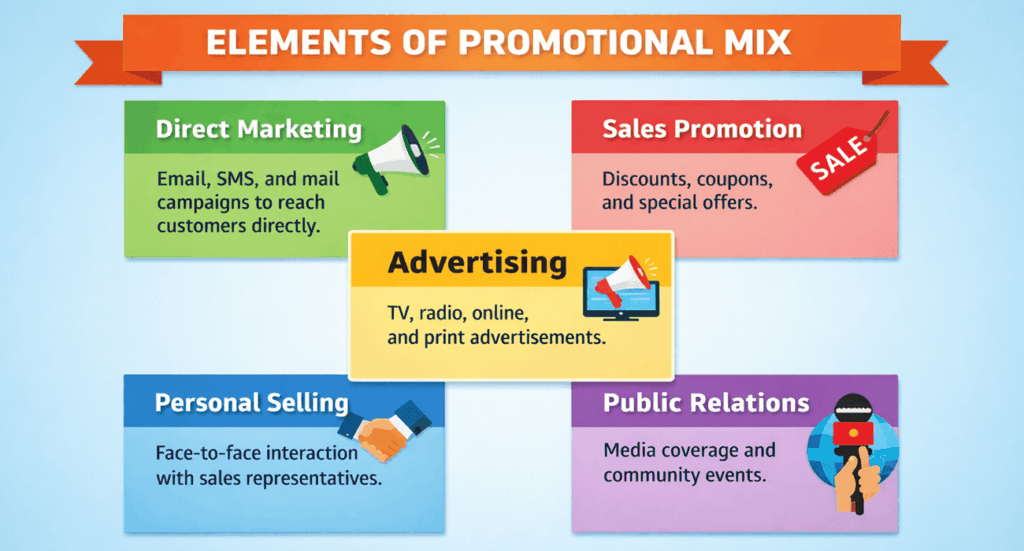
Below are the main components of a promotional mix, along with modern examples and guidance.
Direct Marketing
Direct marketing involves reaching out to individual customers through channels like email, SMS and social media. Rather than broadcasting a message, you deliver it to a specific person who has given you permission. Examples include:
- Email newsletters with product recommendations based on past purchases.
- SMS coupons sent to customers who have opted in.
- Personalized social media messages through targeted ads.
Because direct marketing can feel intrusive if misused, always obtain consent and offer clear value. Segment your email list so that subscribers receive offers relevant to their interests. A study from HubSpot’s State of Marketing Report shows that 21% of marketers say short‑form videos deliver the highest ROI, and 17.13% plan to increase investment in short‑form video marketing. Video emails or short clips within social campaigns can therefore enhance direct marketing efforts.
Sales Promotion
Sales promotions are short‑term incentives designed to boost sales or encourage trial. They often take the form of discounts, coupons, limited‑time bundles or loyalty points. For example:
- A clothing retailer offers “buy one, get one 50% off” for a weekend.
- An e‑commerce shop runs a flash sale for subscribers only.
Be strategic with discounts; frequent promotions can train customers to wait for deals. Pair promotions with strong messaging about product benefits so that customers see value beyond the price cut.
Advertising
Advertising is paid communication that appears in media such as television, social networks, search engines, podcasts or billboards. According to the Internet Advertising Bureau, digital advertising revenue in the United States reached $258.6 billion in 2024, reflecting a 14.9% year‑over‑year increase. This surge was driven by digital video, search, social media and retail media.
Modern advertising blends creativity with data. Brands use targeted display ads on social platforms, sponsored content with influencers and search‑engine ads to capture attention. Traditional channels like TV and radio still matter for broad reach, but they now integrate with digital campaigns through coordinated messaging and cross‑promotion.
Personal Selling
Personal selling relies on face‑to‑face or one‑to‑one interaction between a salesperson and a customer. Examples include sales representatives presenting products at trade shows, pharmaceutical reps visiting doctors or a home‑appliance demo at a retail store. Though time‑consuming, personal selling can build trust and handle objections on the spot. In an era where AI and digital self‑service dominate, personal touchpoints still differentiate brands in high‑consideration purchases like enterprise software or medical equipment.
Public Relations
Public relations (PR) focuses on managing your organization’s reputation through earned media and community engagement. Activities include charity events, press releases, crisis communications and participation in social causes. For example, a company might sponsor a blood‑donation drive or partner with a local nonprofit. PR works indirectly by showing that your brand cares about more than profits; it builds goodwill and trust.
How the Elements Work Together
Each element of the promotional mix serves a purpose. Direct marketing nurtures customer relationships; sales promotions encourage immediate action; advertising builds broad awareness; personal selling closes complex deals; and PR shapes brand perception. A balanced approach ensures you’re not over relying on one channel. Imagine running a fashion brand: you might use Instagram ads for new arrivals, send personalized email suggestions to repeat customers, host a pop‑up store with stylists and support a charity fashion show. When the customer sees consistent messaging across channels, they perceive your brand as reliable and professional.
Real‑World Examples of a Promotional Mix
PepsiCo’s Integrated Approach
PepsiCo employs a combination of television commercials, social media collaborations and influencer partnerships to remain top of mind. You might recall seeing a celebrity‑endorsed Super Bowl ad, followed by Instagram Stories from your favorite influencer featuring a new flavor. Occasionally, PepsiCo rolls out limited‑time discounts or sponsorships at music festivals. Their involvement in charitable events, such as funding clean water initiatives, enhances public relations and fosters community goodwill.
Local Restaurant Launching a New Menu
Consider a small family restaurant introducing a healthier menu. They start by sending direct email invitations to loyalty‑program members for an exclusive tasting event. To build anticipation, they run a paid Facebook ad featuring mouth‑watering photos of the dishes. A few days later, the head chef appears on a local radio show discussing the benefits of farm‑to‑table dining. Meanwhile, the restaurant partners with a regional health charity to donate a portion of first‑week sales. By mixing direct outreach, advertising, personal selling and PR, the restaurant attracts both existing patrons and curious newcomers.
Tech Startup with Limited Budget
A startup developing an eco‑friendly phone case may not have millions for TV ads. Instead, they focus on social media advertising and influencer partnerships. They send sample cases to micro‑influencers who create unboxing videos on TikTok and Instagram. They also run a referral program encouraging current customers to share discount codes with friends. On Earth Day, the founders organize a beach cleanup and invite local journalists to cover the event. This approach combines advertising, direct marketing, sales promotion and PR without exceeding their budget.
Crafting Your Promotional Mix Strategy
Building an effective promotional mix requires thoughtful planning.
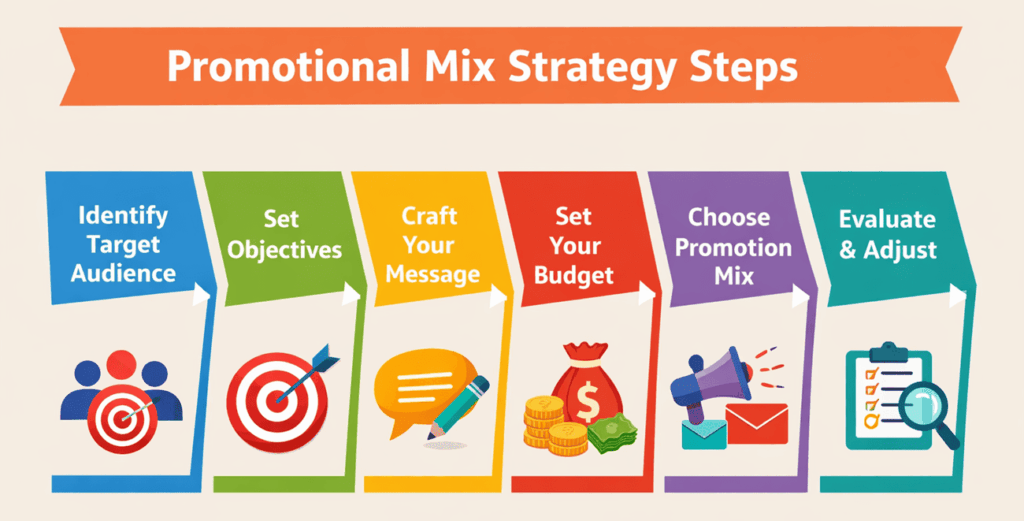
The following framework can guide your process.
1. Determine Your Target Audience
Before spending a single dollar on promotions, identify who you want to reach. What are their interests? Where do they consume media? A gaming company might target young adults interested in esports, while a healthcare provider focuses on parents seeking pediatric services. Use buyer personas and market research to refine your audience. Asking yourself, “Who benefits the most from my product?” can clarify your goals.
2. Define Your Objectives
Are you seeking brand awareness, lead generation or direct sales? Defining measurable objectives helps you select the right mix. For example, a nonprofit raising awareness about recycling might aim for social shares and newsletter sign‑ups, while a new app could focus on downloads.
3. Develop the Message and Format
Craft a compelling message that resonates with your audience. Decide whether a video, article, podcast or social post will best convey your story. On social media, short videos and carousel posts often perform well, while email campaigns benefit from concise copy and a clear call‑to‑action. Align your messaging across channels to maintain brand consistency.
4. Set the Budget
Your budget influences the channels and tactics you can use. Larger budgets might support television commercials or influencer partnerships, whereas smaller budgets may rely on social ads and email marketing. Evaluate potential ROI for each channel. Remember that organic tactics—like PR and community engagement—can be cost‑effective yet powerful when done authentically.
5. Select the Promotion Mix
Choose the combination of direct marketing, sales promotion, advertising, personal selling and PR that aligns with your audience and objectives. A product launch might require heavy advertising and influencer collaborations, while a loyalty campaign could emphasize email and SMS offers.
6. Analyze Results and Adjust
After running a campaign, review performance metrics such as click‑through rates, conversion rates and brand sentiment. Identify which channels delivered the best results and adjust your strategy accordingly. Marketing is iterative; continuous learning leads to better outcomes.
Best Practices
- Leverage AI and automation. Tools that personalize emails, segment audiences and schedule social posts save time and improve relevance. AI chatbots can also handle initial customer inquiries, freeing your team to focus on complex issues.
- Use data responsibly. As privacy regulations evolve, prioritize consent and first‑party data. Collect only the information you need, be transparent about its use and honor opt‑out requests.
- Prioritize mobile experiences. Many consumers access content via smartphones. Ensure emails are mobile‑friendly, videos load quickly and landing pages are responsive.
- Embrace storytelling. People remember stories more than statistics. Share customer success stories, behind‑the‑scenes insights or founder anecdotes to humanize your brand.
- Experiment with short‑form video. As noted earlier, marketers see strong ROI from short videos. Platforms like TikTok, Instagram Reels and YouTube Shorts can amplify your message.
FAQs
Q1. What is a promotional mix?
It’s the combination of marketing tools—direct marketing, sales promotion, advertising, personal selling and public relations—that a company uses to communicate with its audience.
Q2. Why is a promotional mix important?
With billions of people on social media and digital ad spending booming, businesses need multiple channels to reach customers effectively.
Q3. How do I choose the right promotion mix?
Start by defining your target audience and objectives. Then select the combination of tools that aligns with your goals and budget.
Q4. Can small businesses use a promotional mix?
Yes! Even with limited resources, combining social ads, email campaigns and community partnerships can deliver big results. Focus on authenticity and relevance rather than scale.
Conclusion
The promotional mix is not a one‑size‑fits‑all formula. It’s a flexible framework that helps businesses communicate with customers across multiple touchpoints. By understanding each element and tailoring your strategy to your audience, you can create campaigns that educate, engage and convert. When digital platforms and consumer expectations evolve rapidly, a thoughtful promotional mix will keep your brand visible and your message heard.