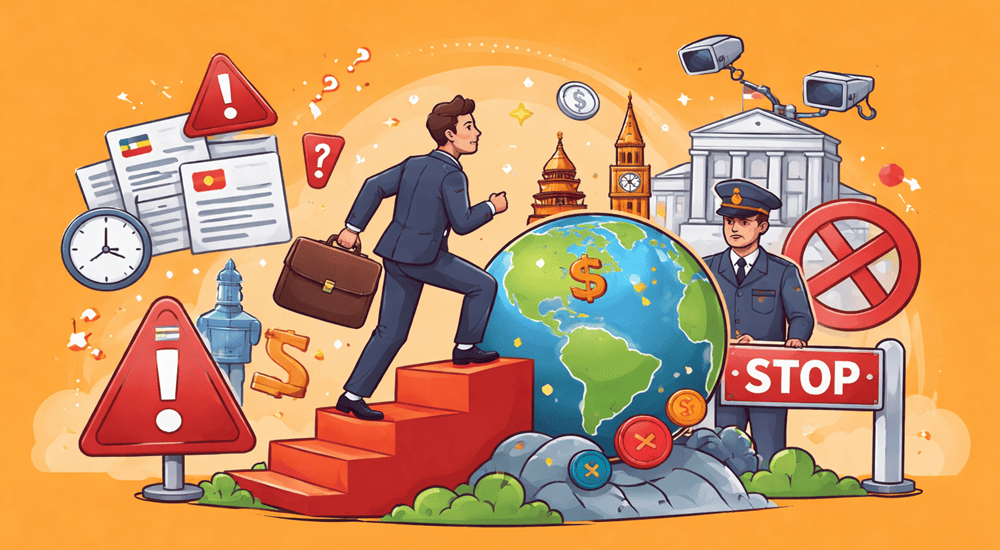
Every organization that enters a new country faces unfamiliar hurdles. These disadvantages, known as the liability of foreignness (LOF), include extra costs, cultural gaps and legal barriers. Scholars first used the term in the 1990s, but its relevance has grown. Today, more than ever, leaders need to understand why foreign firms often struggle compared with local competitors and what they can do about it.
Recent studies have shown that foreign firms are inspected more often in countries with left‑leaning governments and that social initiatives can help mitigate some disadvantages.
Before diving deeper, ask yourself: How would your company react if it faced regulatory hurdles in a new country?
What is the Liability of Foreignness?
At its core, LOF refers to the additional costs foreign firms face when operating abroad.

Figure 1: Infographic summarizing unfamiliarity, relational and discrimination hazards.
These costs stem from three main sources:
- Unfamiliarity Hazards: Foreign firms lack local knowledge about customer preferences, laws and culture. For example, a bank entering a new market may not fully understand regional diversity laws.
- Relational Hazards: Unfamiliar partners and weak networks can lead to misunderstandings or opportunistic behavior.
- Discrimination Hazards: Locals may mistrust or stereotype foreign companies, imposing extra legal or social pressure.
Why does LOF matter?
LOF matters because it reduces competitiveness. When foreign firms spend time and money overcoming these barriers, they may struggle to focus on core business activities. Recent research on 655 microfinance institutions in 77 countries found that foreignness negatively affects both social and financial performance. The effect was stronger when the host country’s institutions were weak.
How Political Ideology Influences LOF
A study examined 38,326 firms across 95 countries and found that government ideology shapes regulatory risk. Left‑wing governments, which favor equality and government intervention, inspected foreign firms more often than local ones. Political globalization amplified this effect, while social globalization reduced it. This finding highlights that LOF is not only about culture or laws; it is also about politics.
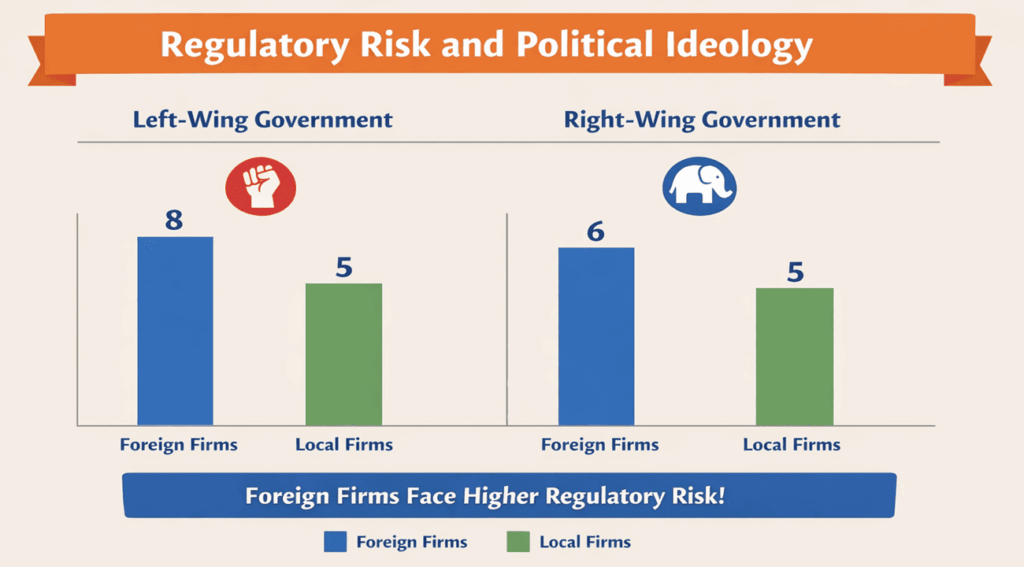
Figure 2: Under left‑wing governments, foreign firms face more regulatory inspections than local firms; the gap narrows under right‑wing governments.
Case Example: A Tech Start‑up in Two Countries
Imagine a technology start‑up from Spain expanding to two new countries—Country A with a left‑wing government and Country B with a right‑leaning government. In Country A, the firm encounters frequent tax inspections and labor audits. Officials question whether the company treats workers fairly and pays enough taxes. Meanwhile, in Country B, the firm still faces inspections, but they are less frequent and more predictable. The difference stems from ideology. In Country A, policymakers aim to protect local jobs and ensure equality, leading to stricter oversight. In Country B, regulators care more about encouraging investment, so the firm experiences fewer hurdles.
This example mirrors the study: foreign firms encounter more inspections in left‑leaning countries.
Sources of LOF Explained in Detail
1. Unfamiliarity Hazards
Foreign firms often misread local tastes and legal frameworks. For instance, a U.S. restaurant chain entering Japan might assume customers prefer large portions. Yet Japanese customers might favor smaller dishes and different flavor profiles. To overcome this hazard:
- Invest in Market Research: Conduct surveys, engage local consultants and test products before a full launch.
- Hire Local Expertise: Bring on managers who understand regional regulations and consumer behavior.
- Adapt Products and Services: Customize menus, packaging and marketing messages to fit local culture.
2. Relational Hazards
Building relationships with suppliers, partners and regulators is vital. Without trust, miscommunication can derail projects. For example, a manufacturing firm may expect just‑in‑time deliveries, but local suppliers operate on different schedules. Strategies to reduce relational hazards include:
- Create Joint Ventures or Partnerships: Working with a local partner provides access to networks and know‑how.
- Train Staff in Cross‑Cultural Communication: Encourage empathy and patience when dealing with different business norms.
- Participate in Industry Associations: Regular meetings help gather information and build rapport.
3. Discrimination Hazards
Negative stereotypes and biases can cause locals to distrust foreign brands. For example, consumers may worry about product quality or workers’ rights. Firms can mitigate discrimination hazards by:
- Engaging in Corporate Social Responsibility (CSR): Support local schools, environmental initiatives or charity projects. Research shows that corporate social responsibility and political engagement can help emerging market multinationals overcome LOF.
- Communicating Transparency: Publish sustainability reports and demonstrate fair labor practices.
- Highlighting Certifications and Safety Standards: Display relevant quality seals and compliance certificates.
Strategies to Overcome LOF
- Non‑Market Strategies: Combining CSR and corporate political activity (CPA) can build trust and influence policy. For example, a renewable‑energy firm might sponsor community solar projects while engaging policymakers on green legislation.
- Longer Tenure and Scaling: The microfinance study noted that longer operations in the host country and careful scaling can reduce LOF over time. Staying invested shows commitment and allows firms to build experience.
- Leverage Global Networks: Use regional headquarters or global alliances to share knowledge and resources. Peer firms in similar sectors can offer insights into navigating local regulations.
Practical Checklist for New Market Entry
Before entering a foreign market, consider these steps:
- Assess Political Risk: Review government ideology and regulatory stability. Are there upcoming elections? How might policies change?
- Map Stakeholders: Identify government agencies, community leaders, consumer groups and competitors.
- Budget for Extra Costs: Include expenses for translation, local compliance and potential delays.
- Plan for Adaptation: Outline how products, services and marketing will change to fit local tastes.
- Develop a Communication Plan: Prepare to explain your values and commitments to local audiences.
Following this checklist can make the difference between success and disappointment.
FAQs
Q1. Is LOF the same for all industries?
No. Regulated sectors such as banking or healthcare often face higher LOF because of strict compliance requirements, whereas industries like software may encounter fewer barriers.
Q2. Can small firms overcome LOF?
Yes. Even small firms can mitigate LOF by partnering with local distributors, engaging in CSR and hiring local talent. Starting small and scaling gradually helps manage risks.
Q3. How long does it take to reduce LOF?
There is no set timeline. Some firms build trust within a few years; others need decades. Consistency in operations and community engagement helps shorten the learning curve.
Q4. Does using technology lower LOF?
Technology can help by streamlining communication and compliance, but human relationships and understanding local culture remain essential.
Q5. Are there benefits to being a foreign firm?
Yes. Foreign firms can bring innovation, global expertise and capital that local markets may value. Leveraging these advantages while addressing LOF can lead to success.
Conclusion
The liability of foreignness is more than a theoretical idea—it is a daily reality for businesses expanding abroad. Recent research underscores that political ideology, social expectations and institutional strength all shape the challenges foreign firms face. By understanding the three sources of LOF—unfamiliarity, relational and discrimination hazards—and adopting strategies such as non‑market engagement, careful scaling and transparency, firms can turn disadvantages into opportunities. Whether you’re an entrepreneur eyeing a new market or a manager overseeing global expansion, recognizing and addressing LOF is key to sustainable growth.