
You and I deal with businesses every day. We pay for food, call a taxi, read a blog or order clothes online. Each of those actions involves a business. But what is a business? Is it only about making money, or is there more?
This blog post will break down the idea of a business in simple language. We look at common types. We share simple examples and fresh numbers that show why small firms matter. By the end you’ll know how businesses work and why they matter to you.
Understanding the Meaning of Business
The word “business” can sound big and serious. Merriam‑Webster defines a business as a commercial or mercantile activity engaged in as a means of livelihood. Put more plainly, a business is any effort to offer goods or services for value. You might run a busy shop that sells coffee. You might fix cars in your garage. You might even run a charity. All of these count as a business.
Commercial and Non‑Commercial Work
Most businesses seek profit. They sell something that people need or want. They pay workers and hope to earn more than they spend. In the United States these businesses must report income to the tax authorities. Big firms like Apple or Google fall into this group.
Not every organization makes money for owners. Some groups use business methods to support a mission. These nonprofits include charities, schools or service clubs. They still buy supplies and pay workers. But they reinvest any surplus back into their cause. They may rely on donations instead of sales.
Why Businesses Matter
Businesses supply nearly every good and service we use. They create jobs, generate income and support families. Small firms have a huge role in this story. The U.S. Small Business Administration’s profile counted 36.2 million small businesses in the United States. These firms made up 99.9 percent of all U.S. companies. They employed 62.3 million people, or 45.9 percent of all workers. From March 2023 to March 2024, 1.281 million businesses opened. During the same period 1.125 million businesses closed. That was a net gain of 155,311 businesses. New and expanding businesses added 14.4 million jobs. Closing businesses cut 13 million. The net gain was 1.4 million jobs. Small firms provided 88.9 percent of those gains.
Labor data tells the same story. From mid‑2020 to late 2023, small firms added jobs every quarter. In one quarter of 2022 they created 324,000 of the 329,000 net new jobs. The largest corporations added only 5,000 jobs. The tiniest businesses have one to four workers. They added more jobs than companies with 250 or more workers. When you support a local business, you support job growth.
Types of Business Structures
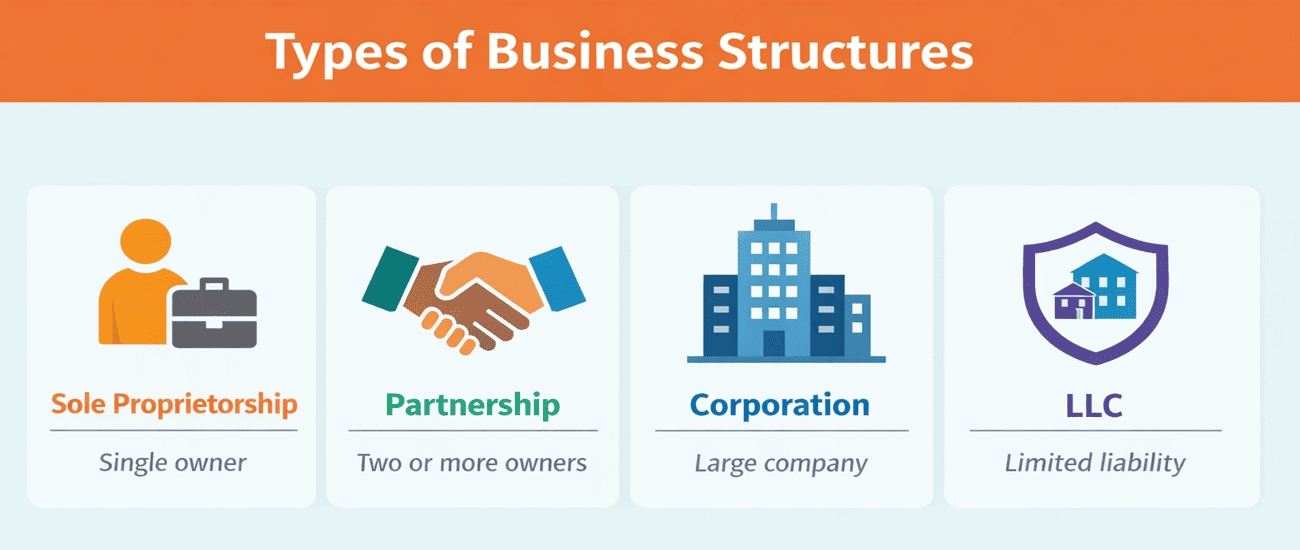
Choosing the right structure shapes how a business pays taxes, shares profits and handles risk. Below are the most common types.
Sole Proprietorship
A sole proprietorship is run by one person. It is easy to start, and the owner keeps all profits. The downside is that the owner is personally responsible for debts and legal problems. Many freelancers, tutors and small shop owners choose this form.
Partnership
In a partnership, two or more people run the business together. They share the work, the profits and the risks. Some partnerships are simple, with each partner carrying equal responsibility. Others, called limited partnerships, let some partners invest money without managing the daily work. Partnerships benefit from pooled skills but require strong trust and clear agreements.
Limited Liability Company (LLC)
An LLC combines features of partnerships and corporations. The owners, called members, enjoy limited personal liability. Their personal property is generally safe if the business faces debts or lawsuits. LLCs can choose how to be taxed and often have fewer formal rules than corporations. They cost more to set up than a sole proprietorship but offer more protection.
Corporation
A corporation is a separate legal entity. It can own property, sign contracts and sue or be sued. The owners are shareholders. They elect a board of directors to oversee the business. Shareholders are not personally responsible for the company’s debts. They risk only the money they invest. Corporations can raise large sums by selling stock. They must follow strict record‑keeping rules and pay corporate taxes.
Other Forms
Some businesses choose special forms. An S corporation passes income and losses directly to shareholders to avoid corporate tax. Cooperatives are owned and run by their members for mutual benefit. Nonprofit corporations focus on helping their cause rather than earning profits.
Real‑World Examples
Concrete examples make these forms easier to picture. Apple Inc. is a large corporation that sells phones, computers and music. Amazon began as an online bookstore. It grew into a corporation that delivers everything from groceries to streaming video. Google, now part of a parent company called Alphabet, operates as a corporation. It earns most of its money from online ads.
Smaller businesses also show the variety of forms. A local bakery run by one chef is likely a sole proprietorship. A family dental clinic may choose a partnership or LLC to share duties and protect personal property. Worker cooperatives include some grocery stores and credit unions. They let employees own and run the business together. Nonprofits like the Red Cross use business methods to deliver help in a crisis. They do not pay profits to owners.
Businesses in Your Everyday Life
You don’t have to look far to see a business at work. The coffee you drink in the morning may come from a family‑run café. The chair you sit on was sold by a shop that buys and resells goods. When your sink leaks, a sole proprietor plumber fixes it. Your smartphone was designed and sold by a big company. Have you ever wondered who baked your bagel or delivered your groceries? Behind each product or service is someone who turned an idea into a business.
How to Choose a Structure
When you decide on a structure, consider four main points: risk, taxes, control and long‑term plans. A sole proprietorship is simple, but you alone carry the risk. A partnership lets you share work and costs, but you need trust and clear rules. An LLC protects personal property and offers flexible taxes. A corporation can bring in money from investors and survive after the founders move on. S corporations, cooperatives and nonprofits suit special goals. Before you decide, talk with a lawyer or tax expert.
Small Business Impact (Infographic)
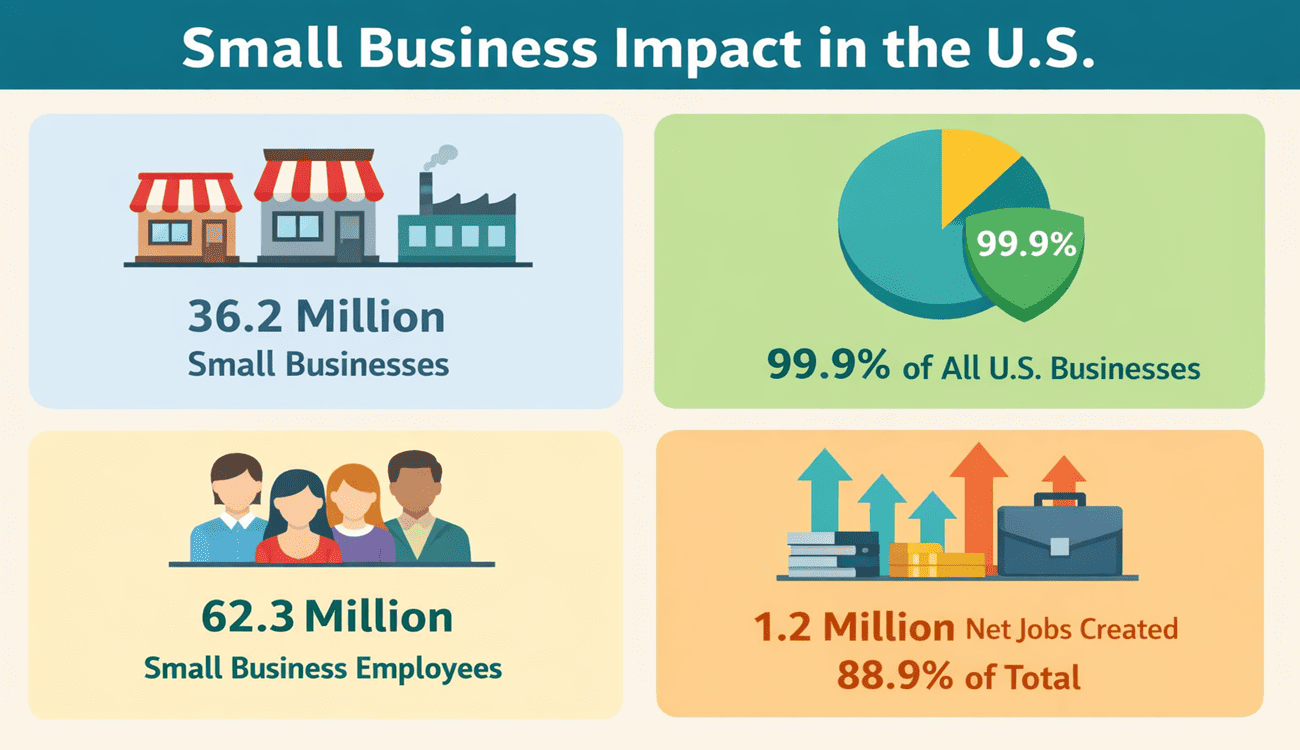
Small firms are engines of growth. The infographic below highlights their contributions:
Why These Numbers Matter
- Count: There are 36.2 million small businesses in the country. Almost every shop, service provider and tiny start‑up you see belongs to this group.
- Workforce: Small firms employ 62.3 million people. These jobs help families pay bills and keep communities alive.
- Growth: Net job gains from 2023 to 2024 were 1.4 million. Small firms created 88.9 percent of those jobs. Even during a slowdown, they kept hiring.
- Job Share: In 2022 small firms created 98.5 percent of new jobs. Big firms added only 5,000. Buying local helps keep people working.
FAQs
Q1. What is a business?
A business is any effort to sell goods or services for value. It can be as small as a one‑person shop or as large as a global corporation.
Q2. Are nonprofits businesses?
Yes. Nonprofits use business methods to raise money and deliver services, but they reinvest any surplus into their mission instead of paying owners.
Q3. How many types of business structures exist?
The common forms are sole proprietorship, partnership, LLC and corporation. Some groups choose S corporations, cooperatives or nonprofit status to meet specific needs.
Q4. What is a sole proprietorship?
It’s a business run by one person. The owner keeps all profits but is personally liable for debts and legal issues.
Q5. Why do small businesses matter?
They make up nearly all businesses. They employ almost half of the workforce. They create most new jobs. They keep local economies alive.
Conclusion
Businesses shape daily life by providing goods, services, and jobs that keep economies moving. Understanding what a business is, how it operates, and which structure it uses helps you make informed decisions as a consumer, employee, or entrepreneur. From small local shops to global corporations, each business plays a role in innovation and community growth. Small businesses, in particular, drive job creation and local development. By supporting and understanding businesses, you actively contribute to stronger, more resilient economies.