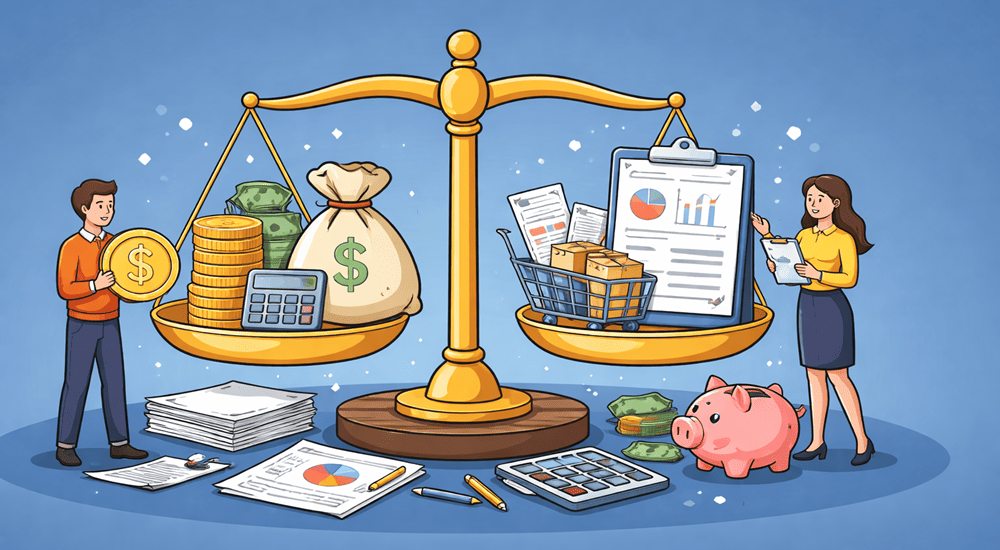
A balanced budget means spending exactly what you earn during a given period. When revenue and expenses match, there is no surplus and no deficit. Governments, businesses, and households all use a balanced budget to control money, reduce risk, and plan ahead. The idea sounds simple, yet it plays a major role in public finance and everyday budgeting decisions.
Many policymakers support a balanced budget to limit debt and show financial discipline. Others argue it can reduce flexibility during tough economic times.
In this blog post, you will learn what a balanced budget is, how it works in real life, and why it matters. You will also explore clear examples, advantages, and practical limitations.
What is a Balanced Budget?
A balanced budget means total income equals total spending during a specific period. There is no extra money left over and no shortage to cover. Governments, businesses, and households all use a balanced budget to manage money in a controlled way. Revenue can come from taxes, sales, fees, or wages. Expenses include salaries, operations, services, and payments.
When a budget stays balanced, the entity avoids borrowing and limits debt. This helps keep finances stable and predictable. Many governments use a balanced budget to show fiscal discipline and build public trust. Businesses rely on it to control costs and protect cash flow. Families use it to pay bills on time and avoid financial stress.
However, a balanced budget also has limits. During economic downturns, income may fall while expenses rise. In such cases, strict balance can force difficult cuts. For this reason, balanced budgets work best when paired with careful planning and regular review.
Balanced Budget Example
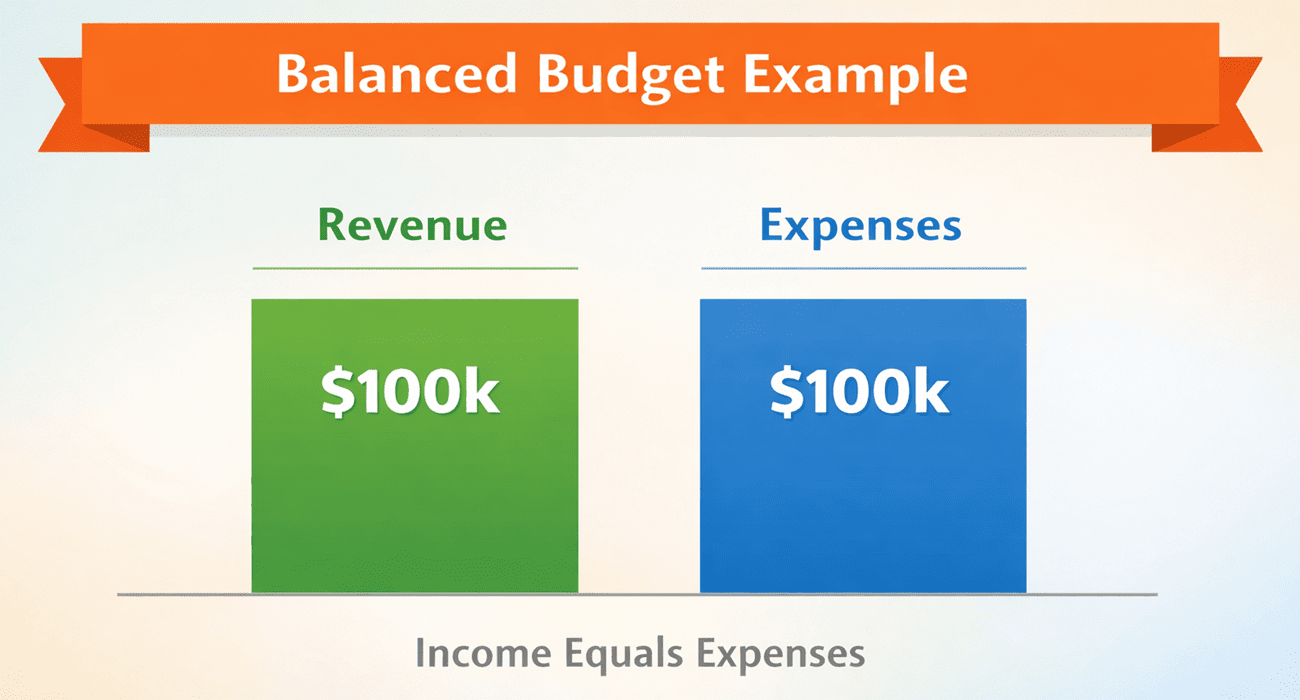
Consider a local government planning its annual finances.
The government expects to collect $500,000 in revenue. This includes taxes, permits, and service fees.
It also plans to spend $500,000 on salaries, infrastructure, and public services. Since income and spending match, the result is a balanced budget.
This approach avoids borrowing and keeps finances under control.
Balanced Budget Vs Surplus Vs Deficit Budgets
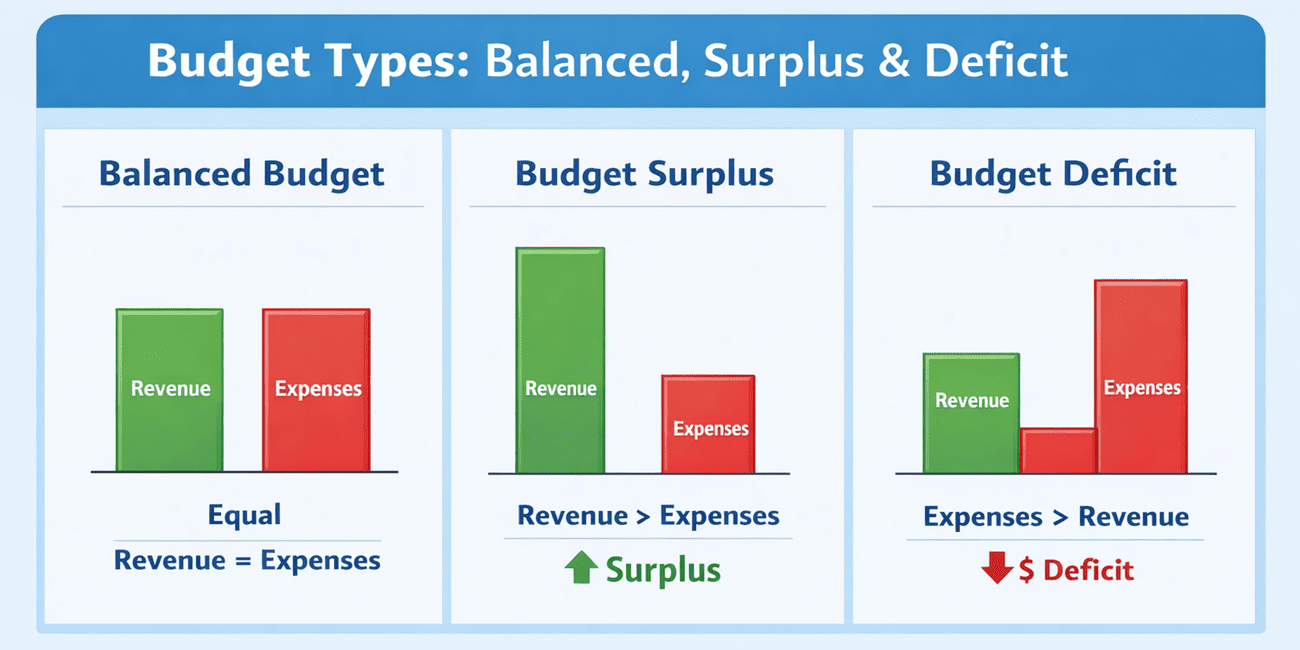
A balanced budget means total income equals total spending during a fixed period. There is no extra money left and no shortfall to cover. Governments, businesses, and households use a balanced budget to keep finances under control. It helps avoid debt and shows strong financial discipline. A balanced budget works well in stable conditions, where income stays predictable and expenses remain steady.
A surplus budget happens when income is higher than spending. The extra money can go into savings, reserves, or debt repayment. Governments may use a surplus to reduce public debt or fund future projects. Businesses often reinvest surpluses into growth. Households may save or invest surplus income. A surplus offers flexibility and financial security.
A deficit budget occurs when spending exceeds income. The gap usually requires borrowing. Governments may run deficits to support the economy during slowdowns. Businesses may accept deficits to finance expansion. Households may face financial stress if deficits continue for long periods. Deficits increase debt and interest costs if not managed carefully.
Comparison Table: Balanced Budget vs Surplus and Deficit Budgets
| Budget Type | Income vs Expenses | Financial Impact | Risk Level |
| Balanced Budget | Income equals expenses | Stable and controlled | Low |
| Surplus Budget | Income greater than expenses | Savings or investment growth | Very low |
| Deficit Budget | Expenses greater than income | Debt and interest costs | High |
Why Governments Use Balanced Budgets
Governments use balanced budgets to keep public finances stable and predictable. When spending matches revenue, governments avoid relying too much on borrowing. This helps control public debt and reduces future interest payments. Lower debt gives governments more freedom to respond to emergencies.
Balanced budgets also signal financial discipline. Taxpayers and investors often trust governments more when they manage money carefully. This trust can improve credit ratings and reduce borrowing costs. Lower interest costs mean more money stays available for public services.
Another reason is accountability. A balanced budget forces leaders to set clear priorities. They must choose which programs matter most and cut unnecessary spending. This encourages efficient use of public funds.
Balanced budgets also protect future generations. When today’s spending stays within today’s income, future taxpayers face fewer repayment burdens. However, governments must apply this approach with care. During economic slowdowns, strict balance can limit support programs. That is why many governments balance long-term discipline with short-term flexibility.
Advantages and Limitations of a Balanced Budget
Advantages
- Debt Control: Balanced budgets reduce the need for borrowing. Less borrowing means lower interest payments over time. This protects financial stability and credit ratings.
- Financial Discipline: Spending limits force better planning. Organizations must prioritize needs over wants. This leads to smarter decisions and less waste.
- Long-Term Stability: When budgets stay balanced, finances remain predictable.
This helps governments and businesses prepare for future challenges. Stability builds trust with investors, employees, and citizens.
Limitations
- Reduced Flexibility: During recessions, revenue often falls. At the same time, demand for public services rises. Strict balanced budget rules may force spending cuts when people need help most.
- Economic Slowdowns: Cutting spending or raising taxes during a slowdown can weaken the economy. This can delay recovery and increase unemployment.
- Limited Investment: Some projects need upfront spending to deliver long-term value. Balanced budgets may discourage investment in infrastructure, education, or innovation.
How to Achieve a Balanced Budget
Achieving a balanced budget requires clear planning and regular control of spending. The first step is to estimate income accurately. Governments must project tax revenue carefully, while businesses and households should base budgets on realistic earnings, not best-case guesses.
The next step is to track all expenses. Fixed costs like salaries or rent come first. Variable costs should be reviewed and adjusted when income changes. Cutting non-essential spending often makes the biggest difference.
Prioritization is also important. Essential services and obligations must come before optional projects. Delaying low-priority spending helps keep the budget stable.
Building a small reserve adds protection. When income exceeds expectations, saving the extra amount helps cover future shortfalls without borrowing.
Finally, review the budget regularly. Comparing planned and actual numbers allows early corrections. A balanced budget works best when it stays flexible, realistic, and closely monitored.
FAQs
Q1. What does a balanced budget mean?
A balanced budget means total revenue equals total expenses during a specific period. There is no surplus and no deficit.
Q2. Is a balanced budget always good?
It promotes discipline and stability, but strict rules can limit flexibility during economic downturns.
Q3. Do all governments follow balanced budgets?
Most U.S. states have balanced budget rules, but the federal government does not.
Q4. Can businesses run deficits?
Yes. Businesses may run short-term deficits to invest in growth, as long as future revenue covers costs.
Conclusion
A balanced budget helps governments, businesses, and households stay in control of their finances. By matching income with spending, it limits debt and supports long-term stability. When used wisely, a balanced budget builds trust, improves planning, and protects future resources. Still, it works best with flexibility, especially during economic stress. Careful forecasting, clear priorities, and regular reviews make balance achievable. In the end, a balanced budget is not just a financial rule. It is a practical tool for responsible decision-making and sustainable growth.