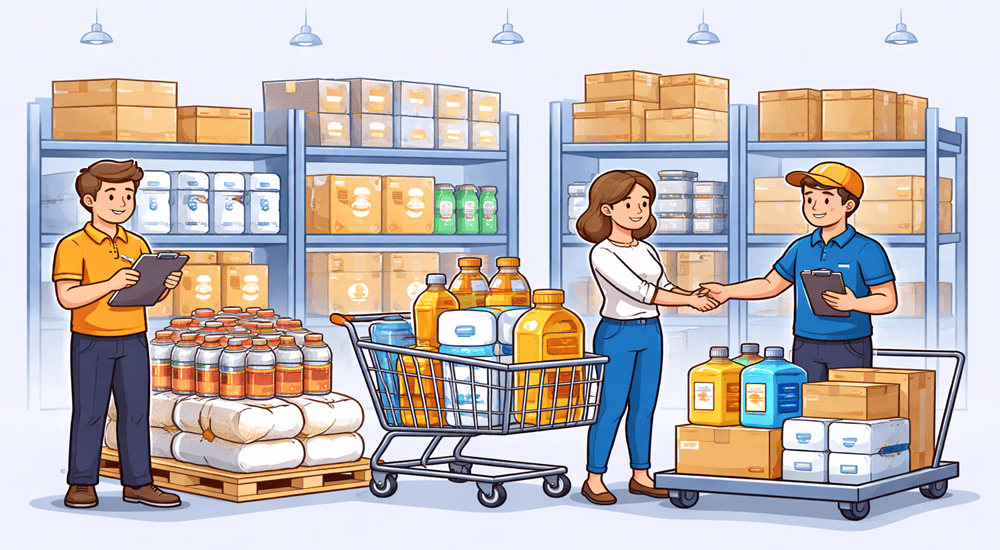
Shopping in large quantities can be a smart way to save money. Bulk purchasing—sometimes called bulk buying or mass buying—is the practice of procuring a large quantity of the same item to secure a lower unit price. Rising food and commodity costs mean that individuals and companies are looking for ways to stretch their budgets.
According to the U.S. Bureau of Labor Statistics, average annual spending on food at home climbed to $6,224 in 2024, up from $6,053 in 2023. With price inflation squeezing budgets, understanding how to buy in bulk effectively is more important than ever.
What is Bulk Purchasing?
Bulk purchasing involves ordering large quantities of identical or similar goods to receive a discount from the supplier. The principle behind it is economies of scale—when you buy more units, the cost per unit goes down. Bulk purchasing can occur at a business‑to‑business level (e.g., a manufacturer buying raw materials or a retailer purchasing inventory) or on a consumer level through warehouse clubs and online retailers. It differs from buying wholesale because the goods may be consumed by the buyer rather than resold.
Why Bulk Purchasing Saves Money
Buying in large quantities reduces the seller’s handling, packaging and transportation costs, and suppliers pass some of these savings on to the buyer. A recent academic study using NielsenIQ data estimates that low‑income households could save about 5% on groceries if they bought in bulk like higher‑income households. That finding underscores how significant bulk discounts can be. In addition, the warehouse clubs and supercenters sector has grown dramatically. An industry analysis by IBISWorld reports that revenue in U.S. warehouse clubs is expected to reach $768.3 billion in 2025, expanding at a 3.1% compound annual growth rate. Such growth shows that more businesses and consumers are embracing bulk buying.
How Bulk Purchasing Works
Bulk purchasing is not a random gamble; it’s a deliberate strategy that requires planning.
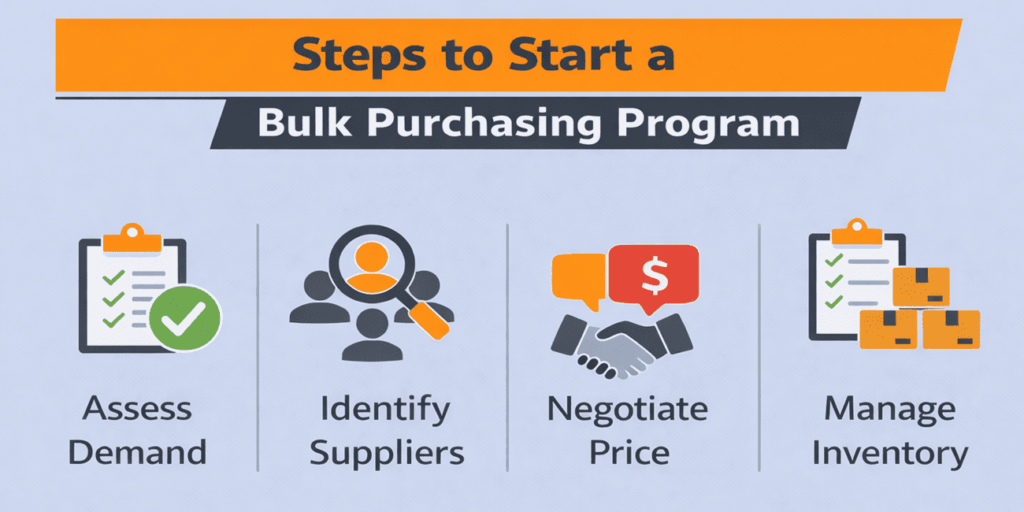
Here’s how it works:
- Identify demand. Estimate how much of the item you need over a specific period. For businesses, this involves analyzing sales forecasts and production schedules. For consumers, think about household staples you use regularly—rice, detergent or paper goods.
- Find suppliers. Research reputable manufacturers or wholesalers. Many businesses negotiate directly with suppliers, while consumers often use warehouse clubs or online marketplaces.
- Negotiate price and terms. Larger orders give you leverage to negotiate lower prices, extended payment terms or free shipping. Companies often sign contracts with suppliers to lock in discounts over multiple orders.
- Manage storage and inventory. Make sure you have enough space to store the goods safely. For perishables, calculate how long items will last and whether you can use them before they expire.
- Monitor usage and reorder. Track how fast you consume the product. Reorder before you run out, but avoid overstocking which ties up cash.
Benefits & Limitation of Bulk Purchasing
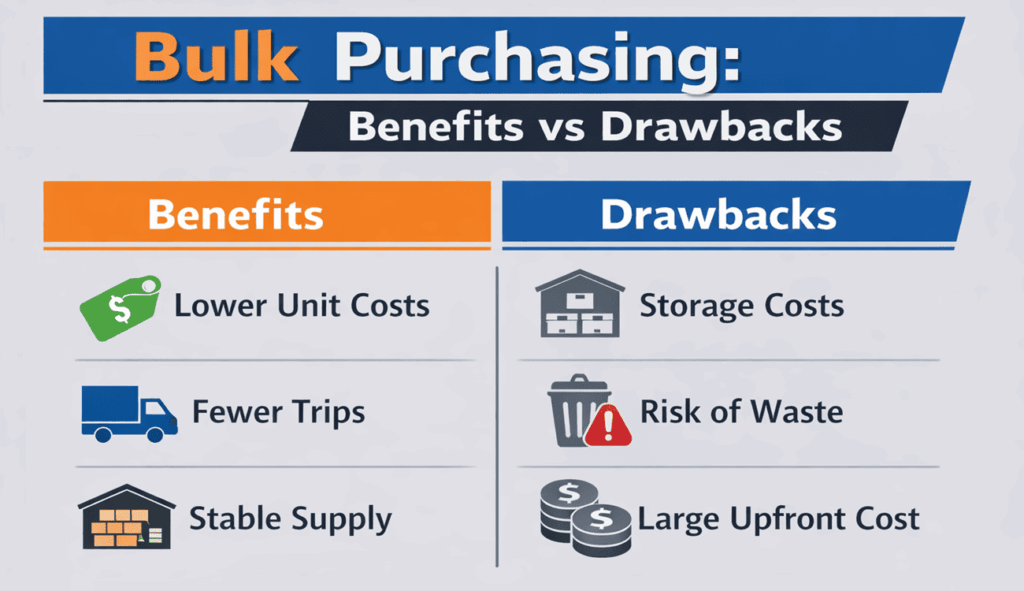
Benefits
- Lower unit costs: Buying a greater quantity usually leads to a lower cost per item. This can result in significant savings over time, particularly for essentials.
- Fewer shopping trips: When you stock up, you reduce the number of deliveries or store visits needed, saving time and transportation expenses.
- Stable supply: Having a stockpile reduces the risk of running out during periods of high demand or supply disruptions.
- Negotiation power: Businesses can leverage large orders to negotiate better terms, including favorable payment schedules and priority shipping.
Potential Drawbacks and How to Mitigate Them
Bulk purchasing isn’t risk‑free. Knowing the downsides helps you make smarter decisions.
- Storage costs: Larger quantities require additional storage space. If you rent a warehouse or use premium shelf space, these costs can offset some savings. Mitigation: calculate your storage capacity before ordering and consider shared warehouses or just‑in‑time deliveries.
- Waste or spoilage: Perishable goods can expire before you use them. Mitigation: stick to non‑perishable or slow‑perishing goods, and plan consumption schedules.
- Large upfront expense: Paying for a large order ties up capital. Mitigation: negotiate installment payments or collaborate with other buyers to split the order.
- Obsolescence risk: In fast‑changing industries (e.g., technology), bulk buying can lead to outdated stock. Mitigation: apply bulk purchasing mainly to stable, non‑innovative supplies.
Bulk Purchasing Strategies for Businesses
Businesses often rely on bulk purchasing to control costs and ensure steady production. Here are strategies to make the most of it:
- Use demand forecasting: Accurate forecasting helps you avoid over‑ordering. Analyze historical sales data, seasonal trends and market changes.
- Consolidate suppliers: Buying multiple goods from one supplier can secure volume discounts and simplify logistics. It also strengthens relationships, improving reliability.
- Participate in purchasing cooperatives: Small businesses can join cooperatives or purchasing groups to combine orders and gain the buying power of larger firms.
- Leverage contracts: Negotiate long‑term contracts with clauses that protect you from price fluctuations and ensure supply continuity.
- Implement inventory management systems: Use software to track stock levels and automate reordering. This prevents both stockouts and overstock.
- Evaluate total cost of ownership: Consider not only the purchase price but also storage, handling and possible obsolescence when calculating savings.
Bulk Purchasing Strategies for Consumers
For families and individuals, buying in bulk can stretch budgets and reduce grocery trips.
- Prioritize non‑perishables: Focus on items with long shelf lives, such as grains, canned goods, toiletries and cleaning supplies.
- Check unit pricing: Compare the price per ounce or per unit to ensure the bulk version is cheaper. Many stores display unit prices on the shelf; if not, bring a calculator.
- Share with friends or family: Split large packages with friends, relatives or neighbors to spread costs and prevent waste.
- Plan meals and storage: Know what you will cook and where you will store your goods. Organize your pantry to rotate older items to the front.
- Join warehouse clubs wisely: Membership stores charge annual fees. Make sure your savings exceed the fee and that you live close enough to make regular trips practical.
Real‑World Examples and Trends
- Warehouse clubs: Membership‑based warehouse clubs offer bulk goods at lower per‑unit prices. The sector’s revenue is projected to reach $768.3 billion in 2025, growing at a 3.1% compound annual rate. This growth shows how popular bulk purchasing has become.
- Pharmaceutical firms: Drug manufacturers buy raw materials in bulk to ensure a stable supply of active ingredients and to negotiate lower prices with suppliers. This practice supports consistent production and predictable pricing for consumers.
- Restaurants and food services: Many food service businesses purchase ingredients like rice, flour and meat in bulk to reduce costs and stabilize menu prices amid fluctuating markets.
- Household cooperatives: Community buying clubs allow households to pool orders for products such as organic produce, cleaning supplies or pet food, enabling access to bulk discounts without requiring individual families to store large quantities.
FAQs
Q1. What does bulk purchasing mean?
Bulk purchasing means buying a large quantity of the same item at once. The larger order reduces the cost per unit through economies of scale and supplier discounts.
Q2. Does buying in bulk always save money?
Not always. Bulk buying saves money when the unit price is lower and you consume the product before it spoils. Always compare unit prices and consider storage costs.
Q3. What are the best items to buy in bulk?
Non‑perishables like grains, canned goods, paper products, toiletries and cleaning supplies are ideal. They have long shelf lives and are used regularly in most households.
Q4. How can small businesses afford large orders?
Small businesses can join purchasing cooperatives, negotiate installment payments or collaborate with other firms to combine orders and increase bargaining power.
Q5. Is there a downside to bulk buying for households?
Yes. If you have limited storage or buy perishable goods that spoil, you may waste products. Also, paying for large orders may strain your monthly budget.
Conclusion
Bulk purchasing is more than a buzzword—it’s a powerful tool for saving money and ensuring a stable supply. As food prices continue to rise and supply chains face uncertainty, buying in bulk can offer relief to households and businesses alike. Yet it requires careful planning, smart storage and an understanding of both benefits and drawbacks. If you’re a business owner or a budget‑conscious consumer, consider analyzing your consumption patterns and experimenting with bulk buying on a few non‑perishable items.