
Have you ever wondered whether a company and an organization are the same thing? Many people use these words as if they mean the same thing, yet they refer to very different structures. Knowing the difference can help you decide how to set up your business or where to volunteer your time.
This blog post dives deep into what a company and an organization are, how they work, and why it matters to understand their differences.
What is a Company?
A company is a legal entity formed by a group of individuals to carry out a specific business activity. In plain language, it exists separately from the people who own it, and it can make agreements, own property, and owe debts just like a person. Companies usually aim to earn profit, though some may also pursue charitable, educational, or social goals.
Legal Status and Structure
Because a company is recognized by law, it has rights and obligations. It can sign contracts, sue or be sued, own assets, and take on liabilities. The owners (often called shareholders or members) enjoy protection from personal liability. If the company fails, their personal assets are generally safe.
In the United States, companies can take many forms. The most common structures include:
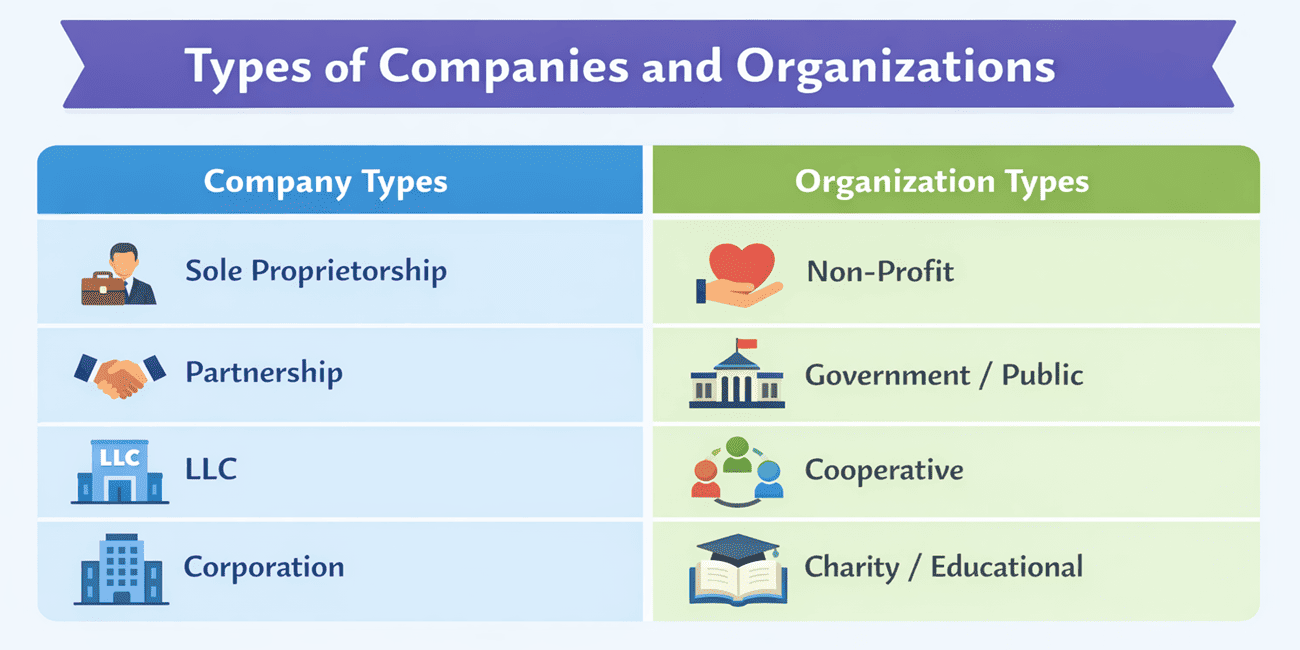
- Sole Proprietorship: One person owns and runs the business. There is no legal separation between the owner and the company, so the owner is responsible for all debts.
- Partnership: Two or more people share ownership and management. Partners split profits and losses and are personally liable for the company’s obligations.
- Limited Liability Company (LLC): This hybrid structure combines the pass‑through tax benefits of a partnership with the liability protection of a corporation. It has become popular for small and medium‑sized businesses.
- Corporation: A corporation is a separate legal person. Owners hold shares, and the company continues to exist even if ownership changes. Corporations can raise money by issuing stock and are often large enterprises.
These structures allow people to choose the level of protection and flexibility they need. For example, a local bakery might start as a sole proprietorship. As it grows, it might convert to an LLC to shield the owner’s personal assets. A global technology giant like Tesla or Google is a corporation with thousands of shareholders.
Purpose and Objectives
Most companies focus on producing goods or services and earning a profit. That profit may go to the owners or be reinvested. Some companies, however, operate as social enterprises or benefit corporations. They are still companies under the law but also pursue social or environmental goals.
Examples of Companies
To make this clearer, let’s look at some companies you might know:
- Amazon: A corporation that sells everything from books to groceries and uses complex logistics to deliver orders quickly.
- Tesla: A publicly traded company that designs and manufactures electric vehicles and energy products.
- Starbucks: A global chain of coffee shops with a strong brand and millions of customers.
- KFC: A fast‑food company famous for fried chicken, known for franchising and global reach.
These companies illustrate how diverse the company structure can be. They all have one thing in common: they operate as separate legal entities with a profit motive.
What is an Organization?
An organization is a structured group of people working together to achieve specific goals. According to the Cambridge Dictionary, it is simply “a group of people who work together in an organized way for a shared purpose”. Unlike a company, an organization does not have to be a legal entity or focus on profit. It can be formal or informal, large or small.
Structure and Purpose
Organizations provide a framework for coordination, task division, communication, and decision‑making. They exist to accomplish goals that individuals cannot easily achieve alone. That goal might be commercial, like making a product; it might be humanitarian, like feeding the hungry; or it might be educational, like teaching children.
Organizations can be:
- Business Organizations: These include for‑profit enterprises like Amazon or Tata Group. They create value through goods, services, innovation, or societal impact.
- Non‑profit Organizations: Charities and NGOs like the Red Cross work toward social, environmental, or cultural missions. In Fiscal Year 2024, the IRS recognized 1.5 million charitable tax‑exempt organizations in the United States.
- Government or Public Sector Organizations: Ministries, local government bodies, and public agencies deliver services and implement policies.
- Cooperatives: Member‑owned organizations where people pool resources to meet common needs, such as credit unions or agricultural cooperatives.
- Educational and Professional Associations: Universities, schools, and trade associations that provide education, training, and support.
Size and Impact
Organizations can be small neighborhood groups or giant global bodies. In the United States, most nonprofits are small: 59% of nonprofits have annual budgets under $50,000, and 97% have budgets under $5 million. Despite their size, nonprofits contribute significantly. In 2022, nonprofits employed 12.8 million workers, almost 10% of the private sector, and added $1.4 trillion to the national economy.
Examples of Organizations
Here are some examples to illustrate the breadth of organizations:
- The World Health Organization: An international body that coordinates global health efforts and responds to health emergencies.
- The Red Cross: A humanitarian organization providing disaster relief, blood drives, and health programs.
- Local Parent‑Teacher Associations: Groups of parents and teachers who collaborate to improve school experiences.
- Community cooperatives: Member‑owned stores or farms that share profits and decisions among members.
Some organizations are made up of multiple companies. For instance, Alphabet Inc. (Google’s parent company) is an organization that includes many smaller subsidiaries. Conversely, some organizations, like clubs or charities, do not own companies but still pursue goals with passion and structure.
Comparing Companies and Organizations
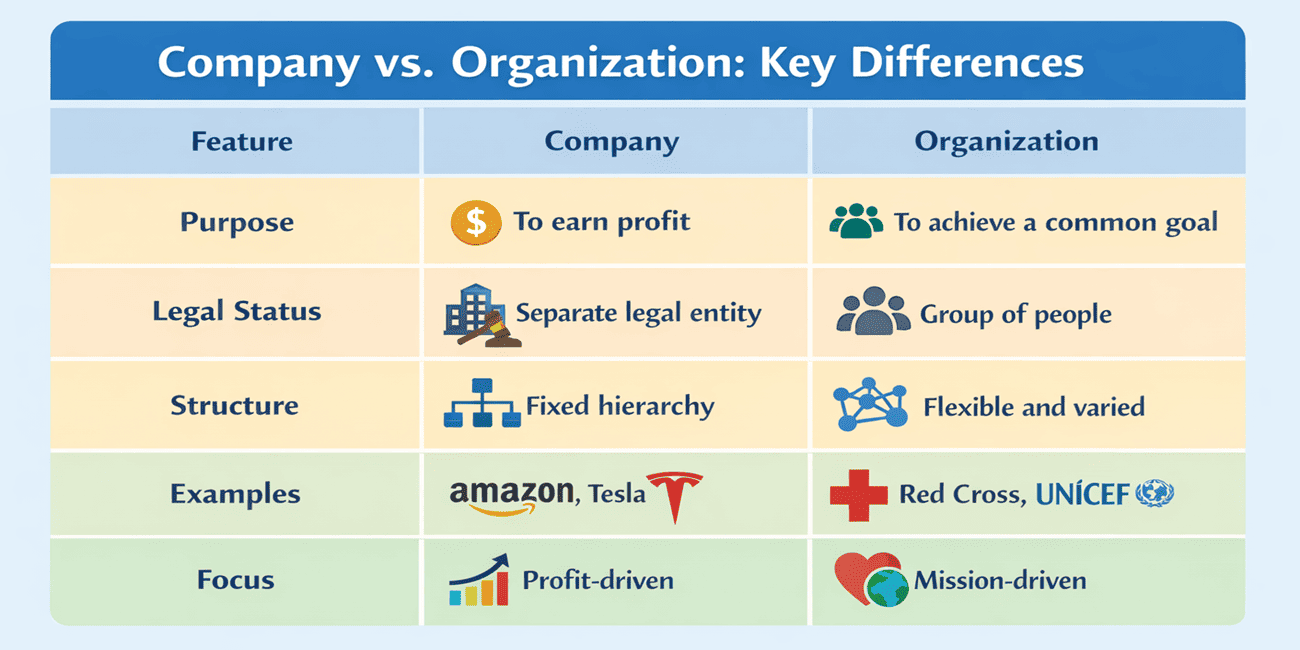
Although companies and organizations both bring people together, they differ in purpose, structure, legal status, and governance. Understanding these differences helps you choose the right form for your goals.
Purpose
A company’s primary purpose is to make profit or carry on a business activity. In contrast, an organization’s purpose can be commercial or non‑commercial, from selling products to delivering humanitarian aid. Many organizations exist solely to meet social needs, and they reinvest any surplus into their mission instead of distributing it to owners.
Legal Status
Companies are legal persons. They must register with government authorities and follow corporate laws. Organizations can be informal or unincorporated. A local hiking club or a student group is an organization, even if it has no legal identity. However, large organizations like the United Nations have formal legal status but may not operate like profit‑seeking companies.
Structure and Governance
Companies typically have a hierarchical structure. A CEO leads the company, and managers oversee departments. Shares determine ownership, and boards set policies. Organizations vary widely. Nonprofits often have boards of directors, but community groups may operate by consensus. The structure depends on purpose and culture.
Profit and Funding
Most companies distribute profits to owners or shareholders. Organizations may fund operations through donations, grants, government contracts, membership fees, or voluntary contributions. They often reinvest any surplus back into their mission.
Examples and Impact
You can think of companies as the engines that drive the economy, while organizations provide the social, cultural, and educational support systems. Both are necessary, and they often work together. A corporation might donate to a charity, and a charity might hire a corporation to provide services.
Key Differences at a Glance
To help visualize these differences, the following infographic summarizes the main points:
Why It Matters to Know the Difference
Understanding whether you need a company or an organization guides how you raise funds, pay taxes, manage risks, and achieve your goals. Here are some scenarios where the distinction matters:
- Starting a Business: If you want to open a bakery, you will likely form a company, such as an LLC or corporation. This gives you a legal shield and allows you to sign leases and contracts.
- Running a Charity: When you set up a food bank, you are creating a nonprofit organization. It needs to register as a 501(c)(3) to receive tax‑deductible donations and grants.
- Joining a Cooperative: If you and your neighbors open a cooperative grocery store, the organization belongs to all members equally. Decisions are democratic, and profits are shared.
- Volunteering: When you volunteer at a hospital or local club, you become part of an organization, even if you never sign a legal document. The group’s purpose guides your work.
These choices affect tax obligations, liability, fundraising options, and public perception. A clear understanding helps avoid confusion and ensures that your structure matches your mission.
Types of Companies and Organizations
Below is an infographic showing different types of companies and organizations. Each type has its own strengths, legal requirements, and suitable uses. Use this as a quick reference when deciding how to organize your venture.
FAQs
Q1. What is the main difference between a company and an organization?
A company is a legally registered entity created to carry on business and earn profit, while an organization is any group of people working toward a common goal.
Q2. Can a company be part of an organization?
Yes. Large organizations often include multiple companies. For instance, Alphabet Inc. owns Google and other subsidiaries under one organizational umbrella.
Q3. Are all organizations non-profit?
No. Organizations can be for‑profit (like a business group) or non‑profit (like a charity). The term refers to structure, not profitability.
Q4. Why do non-profit organizations register with the IRS?
Registering as a 501(c)(3) allows donations to be tax‑deductible and provides formal recognition, which can help secure grants and public trust.
Conclusion
Companies and organizations both unite people around a purpose, but they differ in legal status, goals, and structure. A company is a separate legal entity focused on business activities and profit. An organization is a broader term that can describe any group, from a neighborhood club to a multinational humanitarian body. Knowing the difference helps you choose the right path, comply with laws, and achieve your mission. Whether you start a bakery, volunteer at a food bank, or join a cooperative, understanding these distinctions is the first step toward success.
You explanation were to fruitfull. I have cleared very easy way about company and organization. while I Read this.
Thanks for the information.