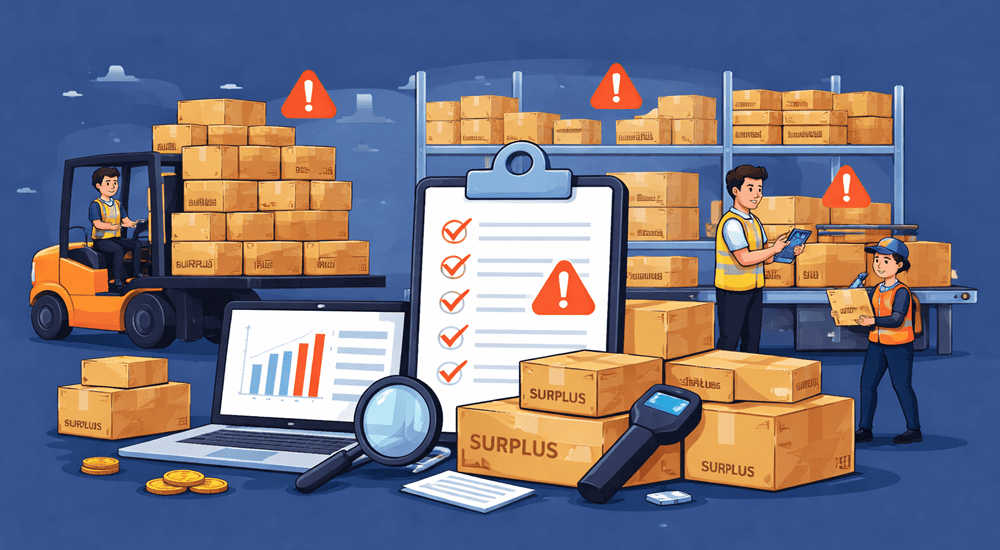
When a company holds more goods than it needs, the excess is known as inventory surplus or surplus inventory. It often arises when buying in bulk for discounts or when demand forecasts miss the mark. While carrying extra stock may seem like a safety net, it can tie up cash and create hidden costs.
This blog post explains what causes an inventory surplus, how it affects your business, and practical steps to manage it effectively.
What is Inventory Surplus?
Surplus inventory is the portion of stock that exceeds the level required to meet projected demand. In other words, it is the difference between how much you keep on the shelves and how much you actually sell. Businesses sometimes intentionally build surplus to buffer against supply chain disruptions or to qualify for bulk‑purchase discounts. However, if the extra stock is not sold quickly, it becomes dormant capital sitting in the warehouse.
An inventory surplus differs from normal safety stock. Safety stock is an intentional buffer used to smooth out short‑term demand spikes or supply delays. Surplus inventory, on the other hand, represents a misalignment between forecasting and purchasing decisions. When a company repeatedly overestimates demand or orders in large quantities without proper planning, the result is a surplus that can erode profits.
Causes of Surplus Inventory
- Inaccurate forecasting: Demand forecasting is part art and part science. When projections are overly optimistic, companies order more than they can sell, resulting in unused stock.
- Bulk purchasing and economies of scale: Suppliers often offer price breaks for large orders. While the unit cost drops, the total cost of holding excess goods, such as storage, insurance and obsolescence may outweigh the savings.
- Supply chain disruptions: During the pandemic, businesses faced long lead times and unpredictable shipping schedules. Many responded by building up extra stock as a buffer. According to a survey conducted by Unleashed Software, the average firm held USD 142,000 of stock over and above what it needed. This “overstock” figure demonstrates how caution can translate into significant cash tied up in inventory.
- Product life cycles and seasonality: Trends shift quickly. Fashion, electronics and consumer goods often become obsolete within months. Seasonal items may linger in the warehouse long after demand peaks if buyers overestimate sales.
- Regulatory or market changes: Tax rules, import duties or environmental regulations can alter demand patterns. For example, when tariffs increased during trade disputes, some importers stockpiled goods ahead of cost increases, inadvertently creating surpluses.
Impact: Asset or Liability?
Extra inventory can seem like an asset because it appears as a current asset on the balance sheet. In certain cases, surplus items appreciate in value. Spare parts for discontinued machinery or rare components, for instance, may become scarce and increase in value over time. If a company owns extra land or equipment, these assets might appreciate and provide collateral for loans. In such scenarios, surplus stock behaves as an asset.
However, surplus inventory often behaves like a liability. Perishable goods such as dairy products, produce or pharmaceuticals can expire and become unsellable. Holding expired items not only wastes money but may also violate health regulations. Even durable goods incur costs: warehousing fees, insurance, and depreciation all erode profitability. Research by Savills shows that global prime warehousing costs, including rents, taxes and service charges, rose by 10.1% in the 12 months to June 2023. Rising storage costs make holding excess stock even more expensive.
Identifying Surplus Inventory
Determining whether you have surplus inventory starts with setting a required stock level for each item. A common tool is the inventory turnover ratio, which measures how many times a company sells and replenishes its stock over a period. A low turnover rate indicates items are sitting on the shelf too long. You can also calculate days of inventory on hand by dividing the average inventory by the cost of goods sold and then multiplying by the number of days in the period. If the result far exceeds your lead time plus a small safety buffer, you likely have a surplus.
Modern inventory software can flag overstock in real time. Systems compare sales rates to preset reorder points and highlight items that exceed maximum levels. Regular physical counts and cycle counts help reconcile records with reality. Signs of surplus include increasing storage costs, items approaching their expiration date, and cash flow tied up in unsold goods.
Real‑World Snapshot: The Cost of Overstock
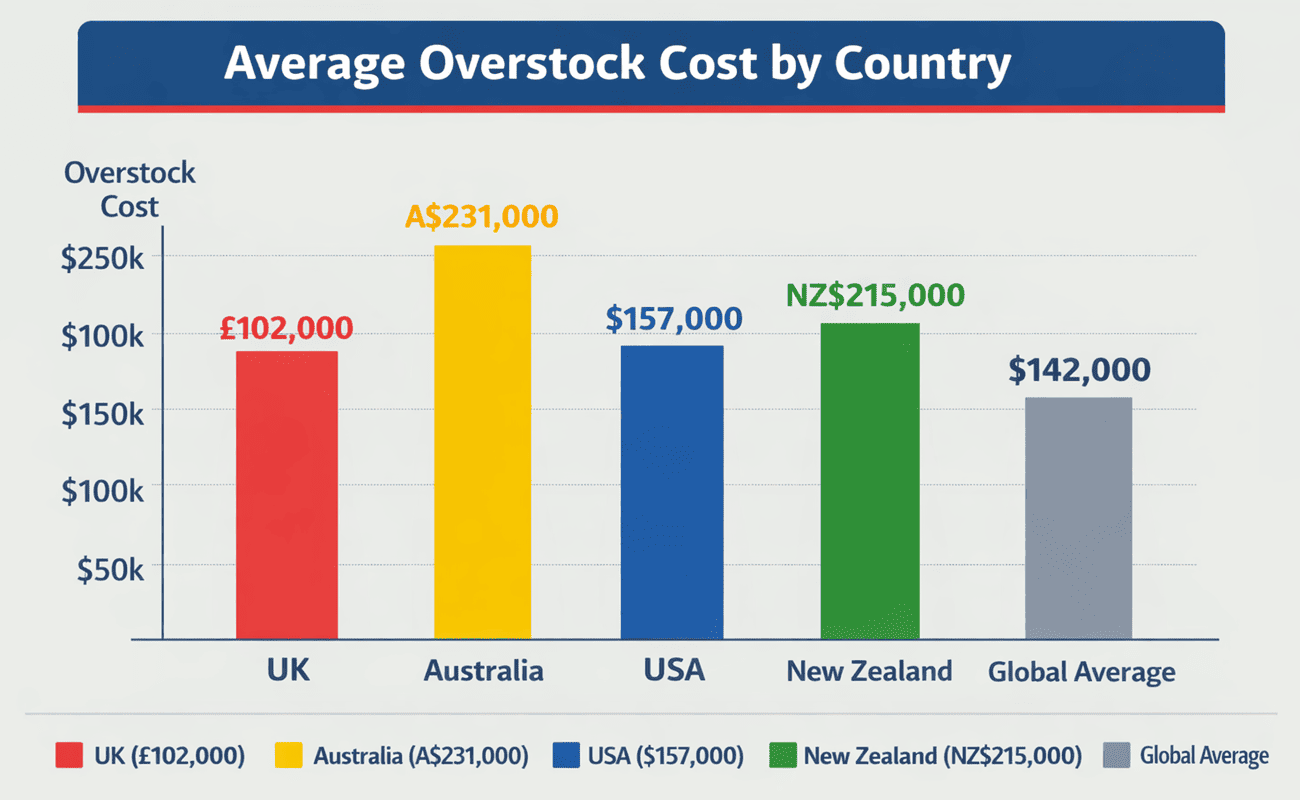
To illustrate the scale of surplus inventory, consider data from Unleashed Software. Its 2023 overstock report looked at 1,886 manufacturers and found that the typical firm held USD 142,000 in inventory beyond what was needed. The report also broke down overstock figures by country. UK companies carried £102,000 worth of unnecessary stock, Australian businesses held A$231,000, U.S. firms held USD 157,000 and New Zealand businesses had NZ$215,000. These numbers underscore how caution and bulk buying translate into significant working capital trapped on warehouse shelves. The infographic below visualizes this data for quick reference.
Surplus Inventory and Macroeconomic Trends
Supply chain and macroeconomic conditions play a large role in inventory policies. For example, the National Association of Manufacturers surveyed 300 companies in February 2024 and found that manufacturers expect their inventories to shrink by 1.6% over the next 12 months. This was the seventh straight quarter of declining inventory expectations, reflecting a shift away from the post‑pandemic stockpiling seen in previous years. As interest rates remain high in many countries, carrying excess stock becomes costly. Businesses are therefore focusing on leaner operations and tighter forecasting.
How Surplus Inventory Affects Your Business
- Cash flow constraints: Surplus ties up money that could be invested in marketing, product development or debt reduction. Excess stock may require borrowing to cover day‑to‑day expenses, increasing interest costs.
- Obsolescence and depreciation: Items that remain unsold lose value over time. Fashion and tech products can become outdated quickly, while perishable goods may spoil. Even nonperishable stock may face depreciation because newer models enter the market.
- Storage and handling costs: As noted earlier, warehousing costs have climbed globally. Extra stock increases the footprint needed for storage, which means higher rent, utilities and insurance bills. Handling surplus goods also requires labor, adding to operational expenses.
- Opportunity cost: The space and capital used for surplus could be redirected to faster‑moving products or new revenue streams. A warehouse full of slow‑moving goods prevents investment in profitable ventures.
Strategies to Manage and Reduce Surplus Inventory
Reducing surplus inventory is not just about selling off excess; it is about creating a system that aligns purchasing with real demand. Below are proven strategies businesses can adopt:
Improve demand forecasting. Analyze sales history, seasonality and market trends to refine forecasts. Use collaborative planning with suppliers and customers to anticipate changes in demand. Forecasting tools in inventory management software can adjust projections as sales patterns shift.
Adopt just‑in‑time (JIT) ordering. JIT aims to receive goods only when needed for production or sales. While this requires reliable suppliers and strong coordination, it reduces the need to store large volumes of stock. During the pandemic, many firms moved away from JIT to hedge against disruptions, but the trend is slowly returning as supply chains stabilize.
Run discount promotions and bundling. Offering discounts on slow‑moving items can help convert them into cash. Bundling surplus products with popular items encourages customers to buy more while clearing out inventory.
Donate or recycle unsold goods. Donating surplus items to charities or recycling organizations not only frees up space but also improves your corporate social responsibility profile. Some businesses receive tax deductions for donations, partially offsetting the cost of unsold stock.
Invest in inventory management systems. Modern systems track stock levels in real time, integrate with point‑of‑sale data and generate alerts when items exceed preset thresholds. Implementing barcoding or RFID technology can improve accuracy and reduce human error.
Leveraging Technology and Data
Technology plays an essential role in managing surplus inventory. Cloud‑based inventory platforms provide real‑time visibility across multiple locations and allow businesses to centralize data. Integrating sales data from e‑commerce platforms and brick‑and‑mortar stores helps predict demand more accurately. Some systems use machine learning to spot trends and automate reordering based on lead times and sales velocity. By leveraging analytics, companies can set dynamic reorder points that adjust with changing conditions, reducing the risk of overstocking.
Building a Culture of Continuous Improvement
Surplus inventory often stems from systemic issues rather than isolated events. Encourage cross‑functional collaboration among finance, procurement, sales and operations teams. Regularly review metrics such as turnover ratio, stockout rate and order lead times. Conduct quarterly or annual audits to identify slow‑moving or obsolete items. When you treat inventory management as an ongoing process rather than a one‑time fix, you create a culture that prioritizes efficiency and responsiveness.
Real‑World Examples
Consider a small electronics retailer that imported large quantities of handheld gaming devices ahead of a holiday season. Demand fell short when a newer model launched, leaving pallets of outdated units. The retailer cleared the surplus by bundling devices with accessories and offering a steep discount. The promotion generated a surge in sales, freed up warehouse space and turned a potential loss into a marketing opportunity.
Another example involves a mid‑size manufacturing firm in the automotive sector. During the pandemic, the company increased safety stock for critical components, only to find that demand returned faster than expected. Excess parts sat in storage as production ramped back up. Management invested in predictive analytics software that combined supplier lead times, order history and macroeconomic indicators. The system flagged items with high overstock risk and recommended order adjustments. Within six months, the firm reduced holding costs by 15 % and improved cash flow.
Conclusion
Inventory surplus looks harmless at first, but it quietly drains cash, space, and efficiency. When stock grows beyond real demand, costs rise and risks increase. Smart forecasting, controlled purchasing, and timely action keep inventory balanced. Businesses that track surplus early can turn losses into opportunities through sales, reuse, or better planning. The goal is simple. Hold what you need, when you need it. That discipline protects cash flow, improves operations, and supports long-term business stability.